Inherited Family Patterns: Naming What Your Lineage Handed Down
Inherited family patterns are emotional habits, beliefs, and strengths repeated down a lineage - both wounds and gifts - that shape how you relate long before you ever choose them consciously.
Your own seven rows, cast from your birth date. Cast your seven generations
-
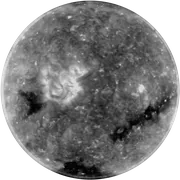 Hvarenah, Sun
1st, Yourself
-
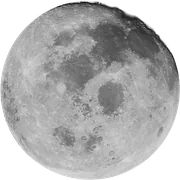 Mah, Moon
2nd, Parents
-
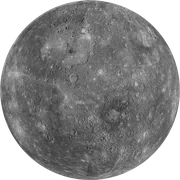 Tir, Mercury
3rd, Grandparents
-
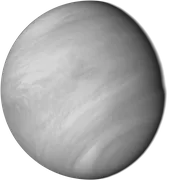 Anahid, Venus
4th, Great-grandparents
-
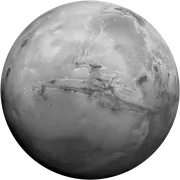 Wahram, Mars
5th, 2nd great-grandparents
-
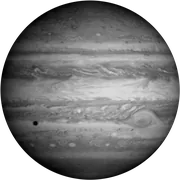 Ohrmazd, Jupiter
6th, 3rd great-grandparents
-
 Kaywan, Saturn
7th, 4th great-grandparents
The house's seven generations, from the table the reading uses. Photographs: NASA and mission teams, in grey. NASA does not endorse Horospire.
Written by Horospire as fixed text, the same for every reader. See how the reading is computed.
What inherited family patterns are
Inherited family patterns are the recurring emotional themes that move through a family across generations: how love is expressed or withheld, how anger is handled, what is allowed to be spoken and what must stay silent, how money and scarcity feel, how achievement is rewarded or feared. They are not single events but grooves worn deep by repetition, absorbed so early that they feel less like beliefs and more like the way things simply are.
Crucially, the inheritance is not only wounds. Lineages also pass down genuine gifts: resourcefulness forged in hard times, fierce loyalty, humour as survival, a capacity for endurance. Seeing the whole picture - shadow and strength together - is what turns "my family is just like this" into something you can actually work with.


How patterns are passed on - learned and biological
The most obvious channel is modelling: children learn emotional regulation, conflict, and intimacy by living inside it. But the science of epigenetics shows inheritance can also be biological. The Dutch Hunger Winter studies found that prenatal famine left altered DNA methylation that persisted into adulthood and the following generation. Rachel Yehuda's research on Holocaust survivors' descendants documented inherited differences in cortisol regulation. The Overkalix study linked grandparents' early-life nutrition to grandchildren's longevity.
The honest takeaway is nuance, not determinism. These findings show that ancestral experience can leave a measurable trace, but they do not mean you are programmed. Environment, relationship, and conscious choice all shape how - or whether - a pattern expresses. Inheritance loads the dice; it does not throw them.
Mapping patterns across seven generations
This is where Horospire's lens is distinctive. Drawing on the Zoroastrian Fravashi tradition - ancestral guardian spirits said to influence descendants across seven generations - it assigns each of your seven classical planets to one generation: the Sun to you, the Moon to your parents, Mercury to grandparents, Venus to great-grandparents, and Mars, Jupiter, and Saturn reaching back to your great-great-great-great-grandparents.
Each placement becomes a doorway into one specific line of your family, framed as a shadow-to-gift theme rather than a fixed fate. It is a reflective device, not a scientific measurement - the value is that it gives shape and language to inheritance that otherwise stays vague. Instead of "something runs in my family", you get a generation, a theme, and a question to sit with.
The house's lens: its interpretive layer, not a measurement of any family.
From recognising a pattern to working with it
Start by naming patterns out loud or on paper, generation by generation: what did this person carry, and what did they hand on? Look for the same theme appearing in different costumes - the workaholic father and the over-responsible child may be running the same inherited fear of not being enough. Recognition is most of the work.
Then separate what is genuinely yours to keep from what you are simply re-enacting. Keep the gifts deliberately; loosen your grip on the wounds with honesty, support, and time. For patterns that overwhelm daily life, a licensed therapist is the right partner. An ancestral reading is best used as a starting map and a mirror - a way to make the invisible visible so the conscious work can begin.
About generational patterns
What are examples of inherited family patterns?
Common ones include difficulty expressing affection, anxiety or hypervigilance, over-responsibility, emotional silence, a scarcity mindset around money, or fear of conflict. Patterns also include gifts like resilience, loyalty, resourcefulness, and humour. They repeat across generations until they are made conscious.
Are inherited family patterns genetic?
Partly. Some transmission is learned through modelling, but epigenetic research (the Dutch Hunger Winter, Overkalix, and Rachel Yehuda's Holocaust-descendant studies) shows ancestral experience can leave biological marks affecting later generations. These marks are responsive, not fixed, so inheritance influences without determining.
How does Horospire map patterns to my family generations?
Each of your seven classical planets is assigned to one ancestral generation using the Zoroastrian Fravashi framework - Sun for you, Moon for parents, Mercury for grandparents, and so on back through seven generations. Each placement frames a shadow-to-gift theme for that specific family line to reflect on.
Is the 7-generation reading a scientific measurement?
No. It is a reflective, symbolic tool, not a clinical or scientific assessment. Its purpose is to give language and structure to inheritance you may already sense. The genuine science of inherited patterns is epigenetics, which Horospire cites as an honest parallel rather than proof.
Can I inherit good patterns too, not just trauma?
Absolutely. Lineages pass down real strengths - endurance, loyalty, creativity, humour, resourcefulness - alongside wounds. Seeing both is essential: the goal is to keep the gifts deliberately while loosening the patterns that no longer serve you.