Breaking Generational Cycles: How to End Inherited Patterns
Breaking a generational cycle means becoming the first person in your family line to recognise an inherited pattern, feel it fully, and choose a new response instead of repeating it.
Your own seven rows, cast from your birth date. Cast your seven generations
-
 Hvarenah, Sun
1st, Yourself
-
 Mah, Moon
2nd, Parents
-
 Tir, Mercury
3rd, Grandparents
-
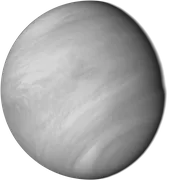 Anahid, Venus
4th, Great-grandparents
-
 Wahram, Mars
5th, 2nd great-grandparents
-
 Ohrmazd, Jupiter
6th, 3rd great-grandparents
-
 Kaywan, Saturn
7th, 4th great-grandparents
The house's seven generations, from the table the reading uses. Photographs: NASA and mission teams, in grey. NASA does not endorse Horospire.
Written by Horospire as fixed text, the same for every reader. See how the reading is computed.
What "breaking a generational cycle" actually means
A generational cycle is a way of feeling, reacting, or relating that gets handed down a family line, usually without anyone naming it: the parent who could not say "I love you" because their parent never did; the anxiety that arrives a beat before any real danger; the unspoken rule that needs are an imposition. Breaking the cycle does not mean erasing the past or blaming your ancestors. It means being the person in the line who finally sees the pattern clearly and stops passing it on unconsciously.
That reframe matters because cycles persist on autopilot. We absorb our family's emotional grammar before we can question it, then re-enact it in our own relationships, often while swearing we never would. Breaking the cycle is the deliberate, conscious work of interrupting that automatic transmission - one choice, one reaction, one repaired moment at a time.


The science: why patterns travel down a family line
Some of this is plainly learned - children copy what they live with. But research in epigenetics shows the transmission can run deeper than behaviour. The Overkalix cohort study in northern Sweden found that a grandparent's access to food in childhood was statistically linked to their grandchildren's health and lifespan. The Dutch Hunger Winter studies showed that famine in pregnancy left altered DNA methylation detectable decades later, into the next generation. Rachel Yehuda's research on the descendants of Holocaust survivors found altered stress-hormone (cortisol) profiles passed to children who never lived through the trauma themselves.
None of this means your fate is sealed in your genes. Epigenetic marks are responsive, not fixed - that is the entire point. The same plasticity that lets stress leave a mark also lets safety, repair, and new experience write over it. The science is sober but ultimately hopeful: inheritance is real, and so is change.
Where astrology fits - as a mirror, not a verdict
Astrology cannot prove which patterns your family carries, and Horospire never claims it does. What a chart can do is give you a structured, non-clinical language to reflect on patterns you already half-feel. Horospire maps each of your seven classical planets - Sun through Saturn - to one ancestral generation, drawing on the Zoroastrian Fravashi tradition of ancestral guardians across seven generations. Each placement frames a likely wound and a likely gift for that line of your family.
Read it as a set of journaling prompts, not a diagnosis. If your reading names an early-generation theme of emotional withholding, the value is not in believing the planets caused it - it is in the question it raises: where does this show up in me, and what would responding differently look like today? The chart points; you do the honest looking.
The house's lens: its interpretive layer, not a measurement of any family.
A practical way to interrupt the pattern
Naming comes first: write the pattern as a plain sentence ("in my family, anger means silence"). Patterns lose power the moment they stop being invisible. Then notice the trigger and the gap - the split second between the old feeling rising and the old reaction firing. Breaking a cycle lives entirely in that gap, where you can feel the inherited impulse without obeying it.
Choose one different response and repeat it until it is yours. This is slow, unglamorous work, and it rarely happens alone. Therapy - especially trauma-informed or family-systems work - is the most reliable support for deep cycles, and a reflective tool like an ancestral reading can sit alongside it to keep the bigger lineage picture in view. The goal is not perfection; it is becoming the generation where the pattern softens.
About generational patterns
What does it mean to break a generational cycle?
It means becoming the person in your family line who recognises an inherited pattern, feels it without re-enacting it, and chooses a new response. You cannot change what was handed down, but you can stop passing it on unconsciously.
Can you actually break generational patterns, or is it permanent?
You can change them. Even epigenetics - the biology of inherited patterns - shows the marks are responsive, not fixed: safety, repair, and new experience can write over old stress responses. Patterns persist only while they stay unconscious; awareness plus consistent new choices is what breaks them.
How does a birth chart help me break a cycle?
Horospire maps your seven classical planets to seven ancestral generations, framing a likely wound and gift for each family line. It works as a mirror and a set of journaling prompts to help you name patterns you already half-sense - not as a prediction or a clinical diagnosis.
Do I need therapy to break a generational cycle?
For deep or trauma-rooted patterns, working with a licensed therapist is the most reliable path. A reflective tool like an ancestral reading can sit alongside therapy to keep the wider lineage picture in view, but it is not a substitute for professional support.
Is breaking the cycle about blaming my parents or ancestors?
No. The pattern is rarely anyone's fault - it was handed to them too. Breaking the cycle is about responsibility, not blame: seeing clearly, feeling honestly, and choosing differently so the pattern stops with you.